
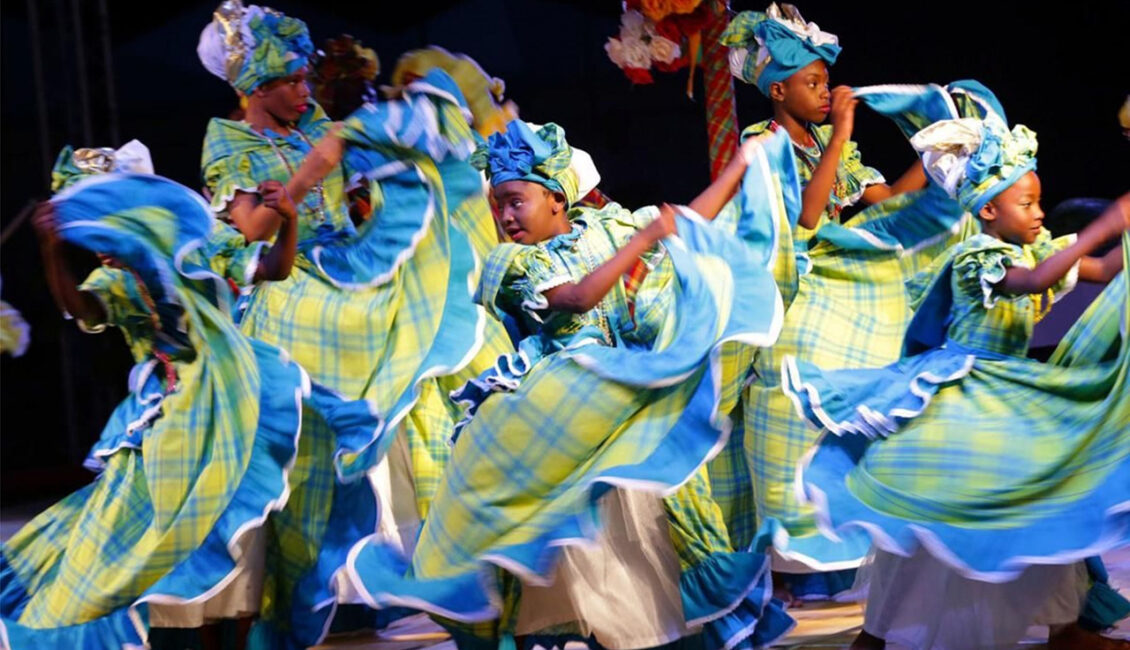
REGULATIONS – CARIBBEAN SHOW
1. Introduction to the Discipline
The regulated disciplines are:
Caribbean Show (Salsa, Bachata, Merengue, Reggaeton)
Caribbean Solo (Salsa, Bachata, Merengue, Reggaeton)
Caribbean Duo (Salsa, Bachata, Merengue, Reggaeton)
Caribbean dances allow different competition types and styles:
Choreographic Show (group choreography that may be performed in a single style or as a mix of Caribbean styles and music);
Caribbean Duo Competition (couples competing in a pasitos-only competition, either in a single style or mixed styles: Cuban Salsa or Puerto Rican Salsa, Bachata, Merengue, and Reggaeton);
Caribbean Solo Competition (individual dancers competing in a pasitos-only competition, either in a single style or mixed styles: Cuban Salsa or Puerto Rican Salsa, Bachata, Merengue, and Reggaeton).
Choreographic Show (Regulations)
At least 80% of the choreography must consist of pasitos; the remaining part may include couple figures, not exceeding 20%.
Music tracks must exclusively consist of Caribbean music (Salsa, Bachata, Merengue, Reggaeton).
Minimal scenic elements may be used (e.g. chairs or other easily transportable objects) and must be brought onto and removed from the stage only by the members of the competitive unit.
Additional dynamic elements such as external people, animals, or motorized vehicles are not permitted.
It is not allowed to present the same choreography and music in different categories and/or classes.
In Solo and Duo performances, it is not permitted to use the same choreography presented in the Caribbean Show.
Each group may freely choose the musical track, with a minimum duration of 2 minutes and 30 seconds for small groups and a maximum duration of 3 minutes and 30 seconds for large groups.
Costume pieces may be removed or scenic elements introduced on stage, always within the limits of decency and dancer safety.
Each association may enter an unlimited number of groups, provided that no dancer participates in more than one group within the same category (a dancer may not compete against themselves).
Competitive and/or show costumes may be used.
Costumes and General Dress Code
Costumes for each discipline are detailed in the specific technical regulations, in compliance with the following general provisions:
-
Competition attire must always reflect sobriety, elegance, and good taste, respecting the traditional standards of the performed dance;
-
For both costumes and accessories, the use of symbols with religious, political, or offensive references is strictly forbidden. Names and logos referring to the dancers’ associations are also not permitted;
-
Costumes must ensure adequate coverage of the dancer’s intimate parts. Therefore, the following are forbidden: high-cut briefs, thongs, and transparent inserts in the brief area;
-
Drawing an imaginary horizontal line, the upper part of the line between the gluteal muscles must not be visible. The brief must cover the buttocks at the back and follow the natural fold between the leg and the body at the front;
-
Dress code violations: once a violation is confirmed, either directly or through official reporting, the competition director may penalize or exclude the choreography from the competition.
Class Division
Beginners
In this class, the following are not allowed: lifts, holds, and acrobatics (at least one foot of each dancer must always remain on the ground).
All figures and pasitos are permitted.
Advanced
In this class, there are no specific choreographic limitations, but the acrobatic content must not exceed 20% of the total choreography time.
Age Categories
Promotional: 6–7 years
Mini: 8–9 years
Youth: 10–12 years
Junior: 13–16 years
Adults: 17–34 years
Senior: 35+
Age calculation: age is calculated as of the start date of the event (this applies to both the Final and the Selections).
Group Type Division
Small Groups (from 3 to 6 participants)
For this group type, the music duration must strictly be 2:30 minutes.
Large Groups (from 7 to 30 participants)
For this group type, the music duration must strictly be 3:30 minutes.
No tolerance is allowed: maximum time is calculated from the start of the music track.
Choreographies exceeding the established duration will not be admitted.
Evaluation Criteria
Scores will be assigned based on two main categories:
Technique (technique, timing, musicality)
Choreography (choreography, interpretation and expressiveness, overall visual impact, costumes, stage use, movements and choreographic formations)
SALSA DUO / SALSA SOLO
The choreography must respect the nature of Caribbean dances and therefore maintain a contained and coherent development.
The use of scenic elements and props is strictly forbidden.
Any costume accessory must be worn and may not be placed on the floor or exchanged between duo members.
The performance must always be danced:
-
On musical timing 1 from start to finish, or
-
On 2 from start to finish, or
-
Break On 2 from start to finish.
Any other timing execution is forbidden and will be considered out of time.
No physical contact between the dancers in the duo is allowed.
Music duration must be a minimum of 1 minute and 30 seconds and a maximum of 2 minutes and 30 seconds.
Dance shoes are mandatory, of any color or material.
Rubber shoes suitable for gymnastics, hip hop, or funky are not allowed.
All costumes must be tasteful, with all intimate parts covered (see Caribbean Show examples).
The use of props is not allowed.
Choreographies composed of one or more Caribbean dance specialties are permitted (Cuban Salsa, Line Salsa, Bachata, Merengue, Reggaeton).
Minimal scenic elements (optional) may be used (e.g. chairs or easily transportable objects) and must be brought onto and removed from the stage only by the competitive unit members.
Each competitive unit may freely choose its music track.
The unit manager is responsible for submitting the music according to the procedures established by the organization.
Costume pieces may be removed or scenic elements introduced on stage, always within the limits of decency and dancer safety.
Each association may enter an unlimited number of competitive units, provided that no dancer participates in more than one unit within the same category (a dancer may not compete against themselves).
Competitive and/or show costumes may be used.
Evaluation Criteria
Scores will be assigned based on two main categories:
Technique (technique, timing, musicality)
Choreography (choreography, interpretation and expressiveness, overall visual impact, costumes, stage use, movements and choreographic formations)
Final decisions of the judging panel are final, binding, and not subject to appeal.
Class Division
Beginners
In this class, lifts, holds, and acrobatics are not allowed (at least one foot of each dancer must always remain on the ground).
All figures and pasitos are permitted.
Advanced
In this class, there are no specific choreographic limitations; however, a maximum of two acrobatic elements per performance is allowed.
Age Categories
Promotional: 6–7 years
Mini: 8–9 years
Youth: 10–12 years
Junior: 13–16 years
Adults: 17–25 years
Senior: 26+
Age calculation: age is calculated as of the start date of the event (this applies to both the Final and the Selections).
JUDGING PANEL
The judging panel will consist of expert technicians for each discipline.
The selection is at the sole discretion of the organization.