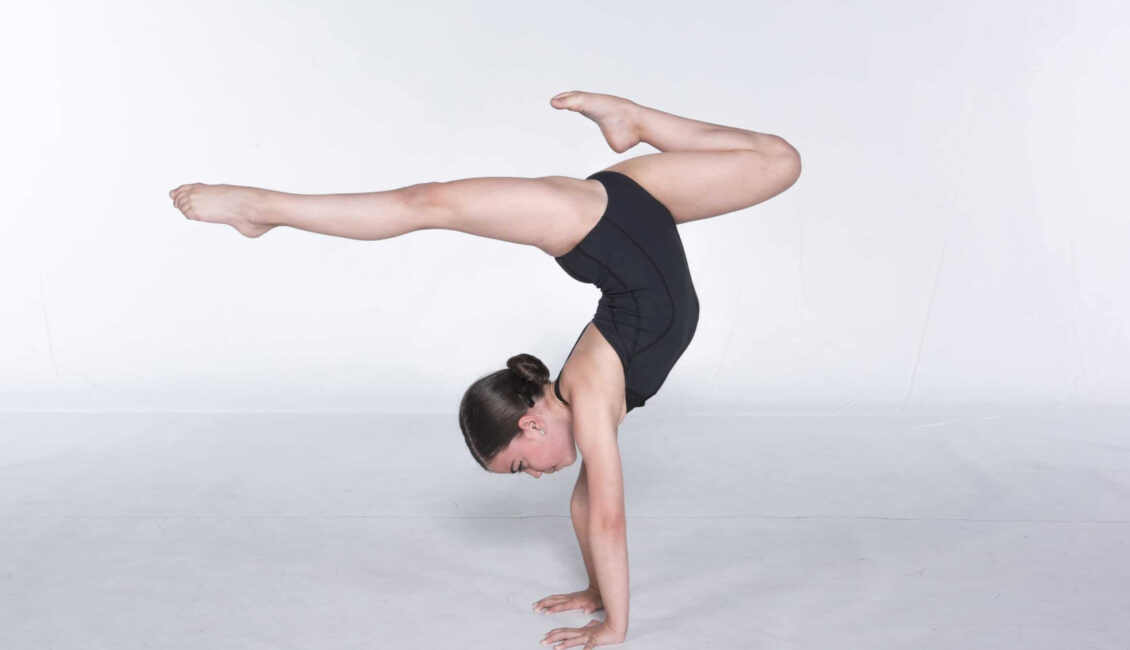
REGULATION ACRODANCE
DISCIPLINE DESCRIPTION
The Acrodance discipline combines dance technique, interpretation, expressiveness and creativity with the addition of acrobatic elements. The final score will result from the average between the dance and acrobatics score.
The choreography may include any dance style, except for:
- Disco Dance
- Hip Hop
- Break Dance
Acrodance can be performed with music of any genre, such as classical, jazz, modern, folk, disco dance and other styles.
This discipline stands out for its expressiveness and for the smooth transition between choreographic movements and acrobatic sections. An Acrodance choreography must contain more than 50% choreographic and dance movements compared to acrobatic content in order to be classified as such.
ACROBATIC ELEMENTS
Dancers are required to include acrobatic elements, which may be performed individually or in combination. Acrobatic elements must not be repeated: only the round-off may be repeated multiple times to prepare different acrobatic jumps.
Acrobatic combinations and balances are allowed. Strength elements are permitted.
Dance technique and choreographic variety have the same value as the difficulty of acrobatic elements. Each element must be performed with correct technique and elegance, respecting musical timing, fluidity and amplitude of movements, artistic execution and controlled landing.
Acrodance is performed without tatami, using a dance floor. Objects, accessories or stage sets are not allowed. An accessory may be part of the costume (e.g. a hat), but it cannot be worn or removed during the performance.
In the duo, group and formation categories, dancers must focus on:
synchronization,
dance technique,
acrobatic elements,
gymnastic skills,
choreographic coherence,
and stage presentation.
Lifts and holds are not considered acrobatic elements but are allowed.
ALLOWED ACROBATIC ELEMENTS
Cartwheel
Forward roll
Backward roll
Bridge
Handstand
L-sit
Round-off
Front walkover
Back walkover
Head / neck / shoulder kip
Front handspring
Back handspring (flic flac)
Aerial cartwheel
Back handspring without hands
Tempo flip
Backward salto, tuck or straight (without twists)
Forward salto, tuck or straight (without twists)
COMPETITION CATEGORIES
Categories are divided by age group, number of dancers and gender.
Age groups
- Mini: 8–9 years
- Youth: 10–12 years
- Junior: 13–16 years
- Adults 17–25 years
- Senior: 26+
Age calculation: age is calculated as of the start date of the event (this applies to both the Final and the Selections).
Number of participants
- Solo
- Pair
- Duo
- Small group: from 3 to 6 members
- Large group: from 7 to 28 or more members
Gender
- Female
- Male
For Small Groups and Groups, participants may be mixed gender.
PERFORMANCE AND TIME LIMITS
Connecting movements between acrobatics and dance must have a sinuous, fluid style and always be in harmony with the music, which must be interpreted from the beginning to the end of the choreography.
Dance movements have equal importance compared to acrobatic and gymnastic difficulties, as well as choreographic composition, use of the stage, scenery, costumes and stage interpretation.
Diagonals are not allowed.
Soloists: 2:30 max
Duo: 2:30 max
Small group: 3:30 max
Large group: 4:30 max
SOUND EFFECTS AT THE BEGINNING OF THE CHOREOGRAPHY ARE NOT ALLOWED
REGULATION – FANTASY ACRO
Introduction to the discipline
The Fantasy Acro discipline differs from Fantasy due to the mandatory inclusion of acrobatic and gymnastic elements, including movements with a flight phase. The objective is to create a choreography where acrobatics plays a leading role together with dance, elegance, interpretation and expressiveness.
As in Fantasy, the choreography in this discipline must tell a story with a clearly defined beginning and ending.
Allowed categories and divisions
The age categories are as follows:
- Promotional: 6–7 years
- Mini: 8–9 years
- Youth: 10–12 years
- Junior: 13–16 years
- Adults: 17–25 years
- Senior: 26+
Age is calculated as of the start date of the event (this applies to both the Final and the Selections).
For groups, the average age is considered, while for duos the age of the oldest dancer applies.
- Soloists
- Pair
- Duo
- Small groups (3–6 participants)
- Large groups (7–28 participants)
Soloists may compete in their own age category. For groups, the average age of all participants must be calculated to determine the appropriate category.
Performance time limits
Soloists 2:30 max
Duo 2:30 max
Pair 2:30 max
Small group 3:30 max
Large group 4:30 max
Technical and artistic rules
The choreography must not appear as an artistic gymnastics routine but as a fluid composition coherent with the chosen theme.
Acrobatic, pre-acrobatic and gymnastic elements, as well as dance movements or free and imaginative body movements, must be performed homogeneously and proportionally by the participants.
Technical elements typical of gymnastics must show a clear, correct and visible execution technique, progression and landing, and must be integrated within the musical context.
Connecting movements between acrobatics and dance must have a sinuous, fluid style and always remain in harmony with the music, which must be interpreted from the beginning to the end of the choreography.
Acrobatic elements may not be repeated, with the sole exception of the round-off.
Dance movements have equal importance compared to acrobatic and gymnastic difficulties, as well as choreographic composition, stage use, scenery, costumes and stage interpretation.
Stage props and accessories are allowed.
The performance takes place without the use of tatami.
Lifts and holds are allowed but are not considered acrobatic elements.
Only for the final round it is permitted to use a video related to the story projected on a maxi screen (required format MP4).
Diagonals are not allowed.
Participation rules
Please refer to the participation methods indicated in the General Regulation.
Evaluation criteria
The jury will mainly evaluate:
Technique and correctness in the execution of acrobatic/gymnastic/dance elements
Harmonious integration between dance and acrobatics
Originality and creativity of the choreography
Interpretative and expressive ability
Use of the stage, scenery, costumes and props
Overall fluidity and balance of the performance
Coherence between the chosen theme and the execution
The judges will be divided into:
Jury for the acrobatic section
Jury for the dance section
Jury for the choreography / development of the theme
Awards and recognitions
According to the provisions of the General Regulation.