AERIAL DANCE REGULATIONS
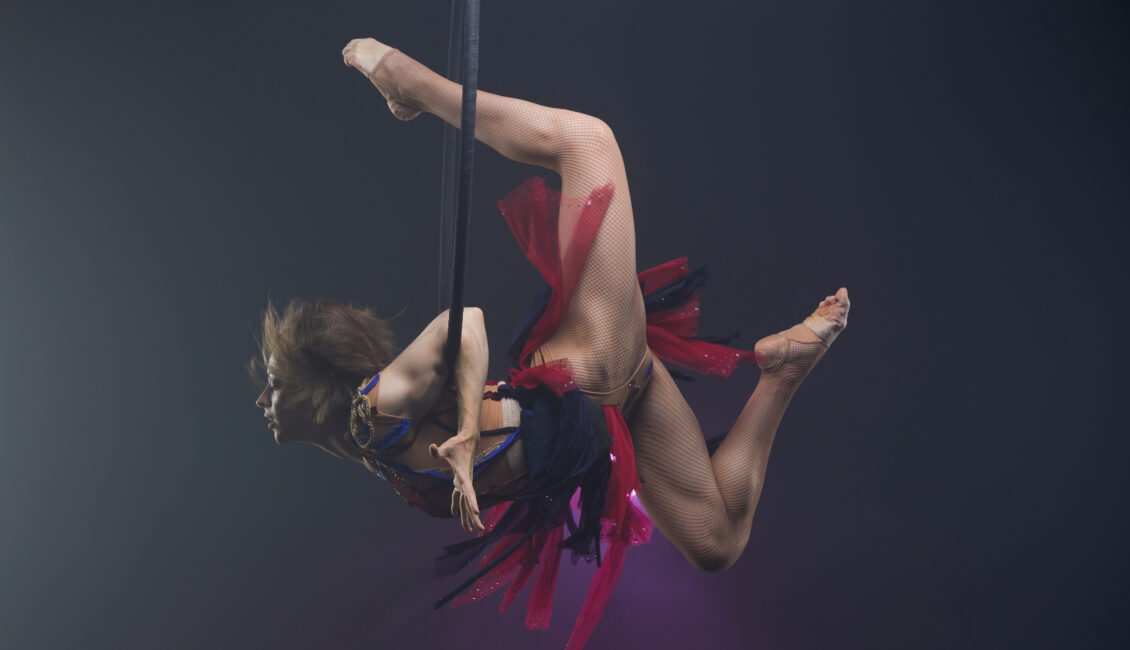
An explosion of technique, strength, and elegance suspended in the air.
At the WDCP&C, Aerial Dance comes to life through silks, hoop, hammock, and every aerial apparatus imaginable, where every movement tells a story in flight. Open to artists aged 8 years and over, this discipline combines acrobatics, dance, and artistic expression into one powerful performance.
PARTICIPATION
The International Final is open to competitors who have been awarded a Scholarship during one of the live qualifying events held throughout the country, available here: Qualifying Events, or through Video Entry.
IMPORTANT: Winners of the Amateur category are exempt from the qualifying rounds and receive direct access to the Final, as they automatically advance to the Pro category according to the competition regulations.
Please read the General Event Regulations carefully. They contain essential information required to complete the registration process for any WDCP&C event.
RIGGING & EQUIPMENT
Competitors may compete in the following divisions:
- Aerial Silks – Solo / Duo / Group
- Aerial Hoop (Lyra) – Solo / Duo / Group
- Aerial Hammock – Solo / Duo / Group
- Mixed Apparatus – Solo / Duo / Group
For the International Final, five aerial rigging points will be available.
The rigging system consists of:
- 1 central manual pulley system, equipped with certified static rope suitable for aerial performance.
- 4 lateral pulley systems, equipped with certified static ropes suitable for aerial performance.
The suspension height may be adjusted on the lateral pulley systems upon request. All rigging adjustments and equipment setup will be carried out exclusively by a qualified aerial rigging technician.
IMPORTANT – PRO CATEGORY ONLY
If your performance requires the suspension height to be adjusted during the routine, you must provide your own rigger. All operations will nevertheless be supervised and approved by the event’s official technician.
APPARATUS PROVIDED BY THE ORGANIZATION
Aerial Silks
Certified aerial silks equipped with a swivel, total length 8 m. Colours will be announced during venue setup.
Aerial Hoop (Lyra)
Certified padded hoops suspended from a single rigging point using a black 1.5 m closed-loop polyester spanset with swivel. Available external diameters: 85 cm, 90 cm, 95 cm and 100 cm.
Aerial Hammock
Not provided.
Mixed Apparatus
Not provided.
Safety Mats
The use of safety mats is mandatory for all competitors. Dimensions: 2 m × 2 m × 40 cm.
PERSONAL EQUIPMENT
Schools and independent competitors may use their own aerial apparatus during the competition, provided this is declared during registration.
All personal equipment must comply with current safety standards and be suitable for aerial performance. Competitors assume full responsibility for the integrity, certification, and safe condition of their equipment.
This responsibility will be formalized by signing the declaration provided by the organization during the final registration process.
CATEGORIES
Competitors may participate in the following age groups:
- Mini: 8–11 years
- Youth: 12–17 years
- Junior: 18–29 years
- Over Junior: 30–45 years
- Senior: 46 years and over
Age calculation: age is calculated as of the start date of the event (this applies to both the Final and the Selections).
If fewer than three competitors are registered within the same age group, that category may be merged with the immediately higher or lower age group (for example, Junior with Over Junior).
Conversely, if an age category receives an exceptionally high number of entries, the organization reserves the right to divide it into separate groups (for example, Youth A and Youth B) to ensure a balanced competition.
LEVEL OF DIFFICULTY
Each competitor’s experience may vary considerably depending on many factors, making it impossible to establish universally applicable skill levels.
Nevertheless, an indicative classification is necessary to ensure fairness and competitor safety throughout the competition.
For example, two athletes with five years of aerial training may belong to different competitive levels (Amateur or Pro) depending on the quality of their training, consistency of practice, technical development, and individual progression.
Article 6 – Required Elements by Category provides general guidelines to help competitors choose the most appropriate competitive level.
AMATEUR
Applicable to Aerial Silks, Hoop, and Hammock.
A minimum of three years of experience on the apparatus and/or the ability to perform the required elements listed for this category is recommended.
The primary objective is to present a clean, well-structured choreography with smooth, coherent transitions that demonstrates solid apparatus control and a balanced combination of strength and flexibility.
Remember: less is more. The quality of execution is always more important than the quantity of skills performed.
PRO
Applicable to Aerial Silks, Hoop, and Hammock.
A minimum of five years of experience on the apparatus and/or the ability to perform the required elements listed for this category is recommended.
Competitors also qualify if they have previously achieved first place in the Amateur category.
This category requires an advanced level of mastery, including complete control and understanding of the apparatus, fluid transitions, effortless execution, and body awareness that allows the chosen artistic concept to be fully communicated.
Technical precision and artistic quality should be evident throughout every stage of the performance.
ARTIST
Available only at the International Final, with mandatory qualification through Video Entry.
Category for emerging artists aged 18 years and over.
Please refer to Section 8.
DUO
Category divided exclusively by age group for Aerial Silks, Hoop, Hammock, and Mixed Apparatus.
Duos may consist of athletes of different ages and/or different genders. In such cases, registration will be based on the age category of the older athlete.
GROUP
Category divided exclusively by age group.
Groups may perform using any aerial apparatus permitted by these regulations.
A group may include from 2 to 5 aerial apparatuses, with performers of different ages and/or genders. In such cases, registration will be based on the age category of the oldest performer.
MIXED APPARATUS
Category divided exclusively by age group.
Solo performers may compete using any aerial apparatus permitted under these regulations.
As this is considered a special category, no compulsory technical elements are required.
JUDGING & EVALUATION CRITERIA
The judging panel will consist of two Artistic Judges, two Technical Judges, and one Head Judge. Their names and biographies will be published on the official website.
Artistic Score
Each criterion is scored out of 10 points, including half points.
- Interpretation
- Narrative Coherence
- Expressiveness
- Creativity
- Movement, Rhythm and Musicality
Technical Score
Each criterion is scored out of 10 points, including half points.
Technical evaluation is based on the Required Elements by Category (Article 6).
The judges’ decisions are final and not subject to appeal. Results will be published on the official event website.
ARTISTIC CRITERIA
Stage Presence / Interpretation
The performance evaluation begins the moment the competitor enters the stage. Every action visible to the audience and judges—from arranging the aerial silks, hoop, or safety mat to leaving the stage—contributes to the overall quality of the performance.
Fundamental elements include body and facial expression, emotional state, atmosphere, and narrative coherence. Competitors should demonstrate conscious control of their posture, gaze, movement dynamics, and pacing, maintaining fluid breathing that supports the interpretation.
The chosen music tells a story; therefore, the performance should be coherent, with expressions, intentions, and movements aligned with the theme and the artistic identity being presented.
Movement
Beyond the clean execution of technical elements, the fluidity of the transitions connecting them is essential.
The quality of movement should be the result of conscious artistic choices. Every dynamic carries meaning and contributes to the construction of the performance. Rigidity conveys one intention, while a relaxed body communicates another.
The ability to modulate these qualities—and to do so consistently with the chosen theme and narrative—is a fundamental aspect of the overall evaluation.
Narrative Coherence
Floor work is not mandatory. However, if included, it should be performed with intention and attention to detail.
A conscious and purposeful walk is preferable to unnecessary acrobatic movements lacking artistic motivation.
The transition between the floor and the aerial apparatus is a crucial moment of the performance. Mounting and dismounting the apparatus should be fully integrated into the choreography, as neglecting these moments may weaken the overall stage presentation.
Costumes should never compensate for artistic or technical weaknesses. Simple, functional attire that does not restrict movement or alter the visibility of the body’s lines is recommended.
Props, if used, must have a clear dramatic purpose within the performance. Props introduced merely as decoration or left unused on stage may result in penalties.
Creativity
Magic, originality, inspiration, and imagination expressed through movement.
Every performer possesses unique qualities that can emerge as artistic strengths. Even shyness, nervousness, or awkwardness can become meaningful artistic language when embraced and integrated into the performance.
Aerial dance is an open and inclusive discipline where every artist can discover their own voice, tell their own story, and move the audience in a unique way.
Rhythm and Musicality
Pauses, breathing, changes of speed, and variations in movement quality play a fundamental role in creating depth and maintaining audience engagement.
Musicality is not determined solely by matching the chosen soundtrack. It is demonstrated through the performer’s ability to shape movement in response to rhythm, silence, dynamics, and the subtle nuances that compose the music.
Expressiveness
Expressiveness reflects the emotional state conveyed and the atmosphere created throughout the performance.
It is the performer’s ability to communicate emotions, feelings, and intentions with clarity and intensity. Strong expressiveness creates a vivid and compelling connection with the audience, making the performance emotionally engaging and memorable.
TECHNICAL CRITERIA
It is important to clarify that Aerial Dance is a circus discipline and does not originate from artistic gymnastics. It is a living art form, constantly evolving, and by its very nature cannot be rigidly codified into a fixed catalogue of technical elements without losing its essence.
Its purpose is to move and inspire the audience, not to become a standardized sequence of skills performed solely to accumulate points.
Every performance should be unique and represent an authentic expression of the artist, rather than a race to perform the greatest number of difficult elements.
However, in order to ensure fairness and protect competitors, it is necessary to establish divisions based not only on age, but also on skill level, as is commonly done within aerial training programs and schools.
The required elements listed in these regulations are intended as guidelines rather than limitations. They provide a general framework while leaving complete freedom for imagination, artistic research, and personal creativity.
REQUIRED ELEMENTS BY CATEGORY
AERIAL SILKS – AMATEUR
| Minimum Quantity | Required | Not Allowed |
|---|---|---|
| 1 | Flexibility element | Contortion |
| 1 | Strength element | Extreme strength skills |
| Advanced balance elements | ||
| Reverse with straight arms and legs | ||
| Full Skin the Cat | ||
| 1 | Drop (body control must be maintained throughout the movement) | Soleil (S-Wrap), Roll-down, Roll-up, Free Fall, Regrip, Inlocate, Dislocate |
| Optional | Theatrical, choreographic or acrobatic floor work | Advanced dynamic sequences |
AERIAL SILKS – PRO (Bonus may apply)
| Minimum Quantity | Required | Requirement |
|---|---|---|
| 1 | Flexibility element with 180° leg extension or 45° back flexibility | 20° tolerance |
| 2 | Two different strength elements | Hold for a minimum of 3 seconds |
| 1 | Drop | |
| 1 | Soleil (S-Wrap) or Stars Drop | Minimum 2 rotations |
| Optional | Theatrical, choreographic or acrobatic floor work |
AERIAL HOOP – AMATEUR
| Minimum Quantity | Required | Not Allowed |
|---|---|---|
| 1 | Flexibility element | Contortion |
| 1 | Strength element | Extreme strength skills |
| Reverse with straight arms and legs | ||
| Full Skin the Cat | ||
| Advanced balance elements | ||
| 1 | Drop or Roll | Advanced Rolls, Regrip, Inlocate, Dislocate |
| Optional | Theatrical, choreographic or acrobatic floor work | Advanced dynamic sequences and advanced spins |
AERIAL HOOP – PRO (Bonus may apply)
| Minimum Quantity | Required | Requirement |
|---|---|---|
| 1 | 180° leg flexibility element | 20° tolerance |
| 1 | 45° back flexibility element | 20° tolerance |
| 1 | Strength element – Balance | Hold for a minimum of 3 seconds |
| 1 | Strength element – Grip | Hold for a minimum of 3 seconds |
| 1 | Roll | Minimum 2 rotations |
| 1 | Drop | |
| Optional | Theatrical, choreographic or acrobatic floor work |
AERIAL HAMMOCK – AMATEUR
| Minimum Quantity | Required | Not Allowed |
|---|---|---|
| 1 | Flexibility element | Contortion |
| 1 | Strength element | Extreme strength skills |
| Advanced balance elements | ||
| Reverse with straight arms and legs | ||
| Full Skin the Cat | ||
| 1 | Drop (body control must be maintained throughout the movement) | Regrip, Dislocate, Inlocate, advanced dynamic sequences, advanced spins |
| Optional | Theatrical, choreographic or acrobatic floor work |
AERIAL HAMMOCK – PRO (Bonus may apply)
| Minimum Quantity | Required | Requirement |
|---|---|---|
| 1 | 180° leg flexibility or 45° back flexibility element | 20° tolerance |
| 2 | Two different strength elements | Hold for a minimum of 3 seconds |
| 1 | Drop | |
| 1 | Roll | Minimum 2 rotations |
| Optional | Theatrical, choreographic or acrobatic floor work |
DUO
Available for Aerial Silks, Hoop, Hammock, and Mixed Apparatus.
Free routine. Judging criteria are divided into Technical and Artistic scores.
GROUP
Groups may perform using any aerial apparatus permitted by these regulations.
A group may include from 2 to 5 aerial apparatuses.
Free routine. Judging criteria are divided into Technical and Artistic scores.
MIXED APPARATUS
Solo performers may compete using any aerial apparatus permitted by these regulations.
As this is considered a special category, there are no compulsory technical elements.
The apparatus must be supplied by the competitor or their school.
Judging criteria are divided into Technical and Artistic scores.
7. BONUS
- Technical
- Artistic
8. ARTIST CATEGORY
Work in progress
9. PENALTIES
The judges may apply penalties of up to a maximum of 5 points for:
- Late presentation on stage
- Failure to greet the judges and the audience (before or after the performance)
- Dismounting from the apparatus during the performance, unless required by the performance
- Extras interacting with the apparatus or drawing excessive attention away from the main performance
- Performing technical elements that are not allowed in the competitor’s category
- Failure to respect the performance duration set for each category
- Damaged or low-quality music files
- Costumes that compromise the quality or safety of the performance
- Visible logos or brands
- Dangerous accessories (e.g. rhinestones, jewellery)
- Unsafe props, props with little interaction, or props left on stage
- Failure to comply with the regulations
10. PERFORMANCE DURATION BY CATEGORY
| CATEGORY | MINIMUM DURATION | MAXIMUM DURATION |
| AMATEUR | 2:00 min IN THE AIR | 3:30 min |
| PRO | 3:00 min IN THE AIR | 4:30 min |
| ARTIST | 4:00 min | 6:00 min |
| DUO | 3:00 min | 5:00 min |
| GROUP | 3:00 min | 5:00 min |
| MIXED APPARATUS | 2:00 min IN THE AIR | 4:30 min |
If the music is not submitted, the performance will be disqualified with no possibility of refund.